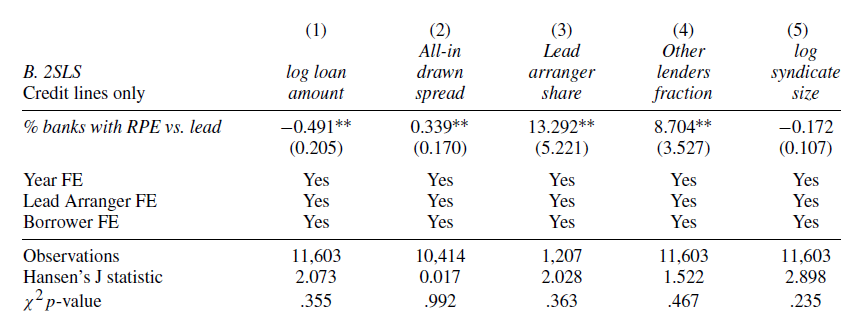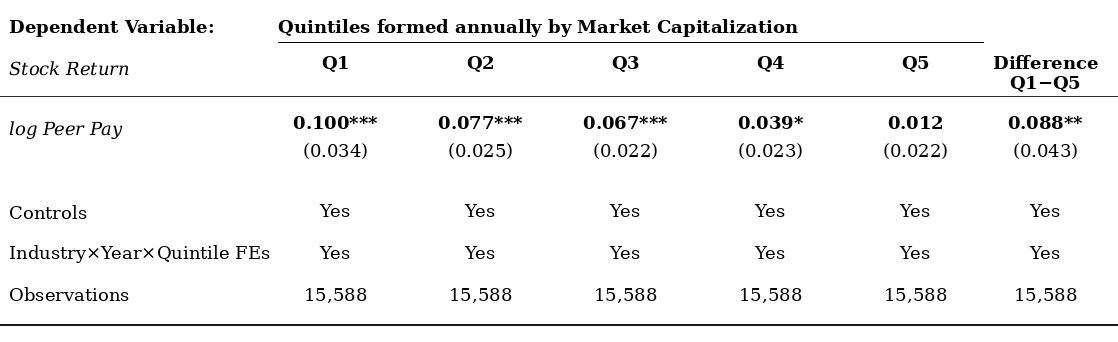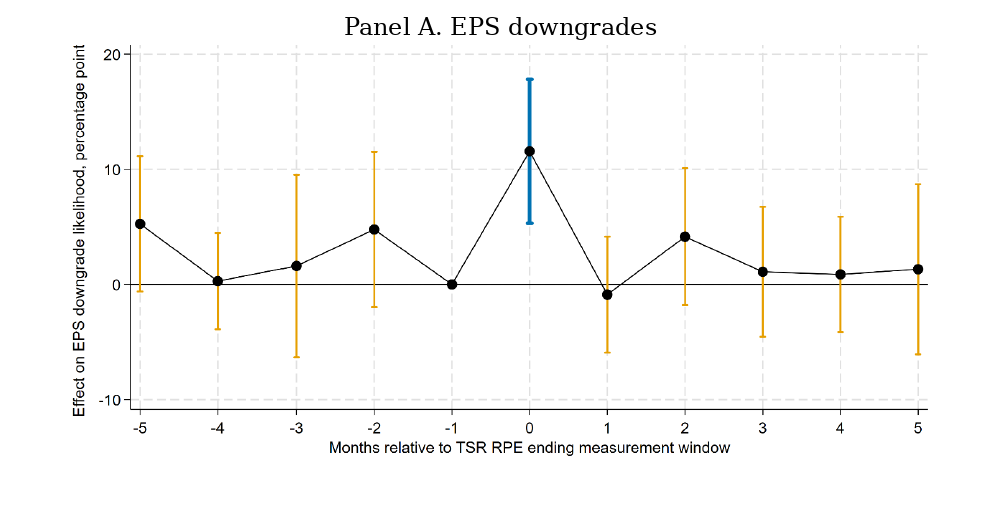
Figure 2 Panel A: event-study chart showing the effect on EPS downgrade likelihood around the TSR RPE ending measurement window
Figure 2 (Panel A) · EPS downgrades around award expiration
Working paper · Revise & Resubmit, Journal of Accounting Research

Executive Compensation and Conflicts of Interest in Analyst Research

Examines whether executive relative-performance awards create conflicts of interest in analyst research. Analysts issue more negative research on compensation peers near award expiration, especially when peers affect the executive’s final relative rank, without sacrificing forecast accuracy.
With Marios Panayides
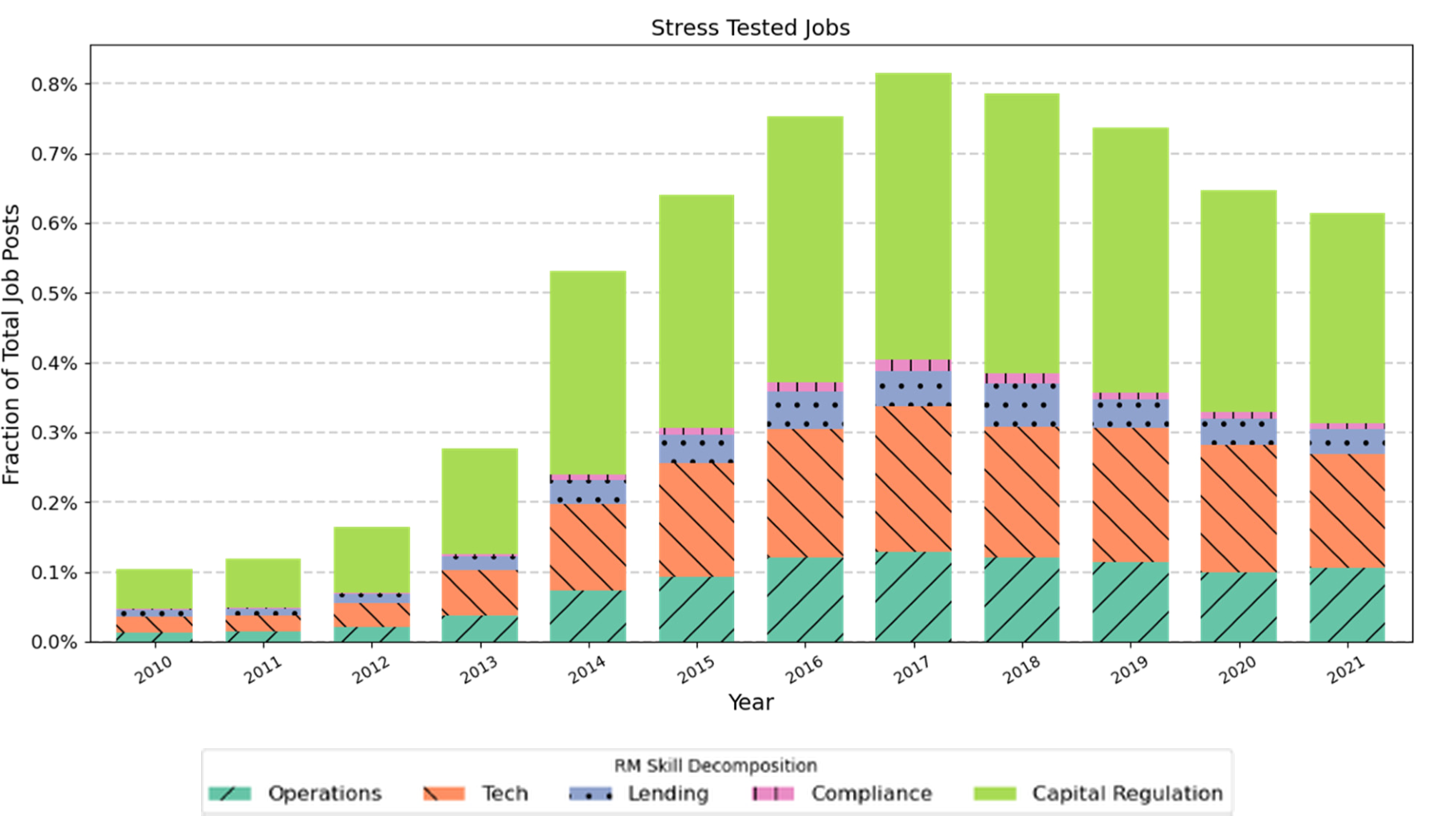
Figure 6 upper panel with legend: stacked bars showing increased demand for stress-test-related risk-management jobs by skill category
Figure 6 (upper panel) · Demand for stress-testing risk-management skills
Journal of Financial Economics · 2025

Bank Stress Testing, Human Capital Investment, and Risk Management

Studies how the Global Financial Crisis and the introduction of stress testing shaped banks’ demand for risk-management workers. Stress testing spurs specialized quantitative hiring, but has a limited effect on broader risk-management hiring.

With Philip Strahan and Jun Yang
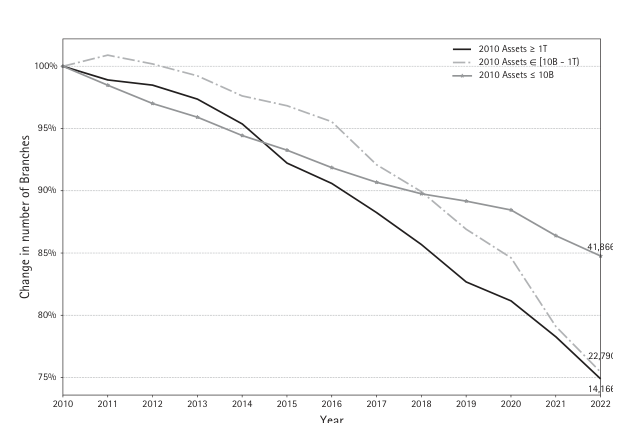
Figure 31.11: line chart showing the decline in bank branches by bank size from 2010 to 2022
Figure 31.11 · Decline of bank branches
Book chapter · The Oxford Handbook of Banking, 4th ed. · 2025

Banking in the United States

Surveys the evolution of U.S. banking, including the growth of shadow banking, the movement of liquidity transformation outside traditional banks, financial crises, and regulatory arbitrage.

With Philip Strahan and Jun Yang
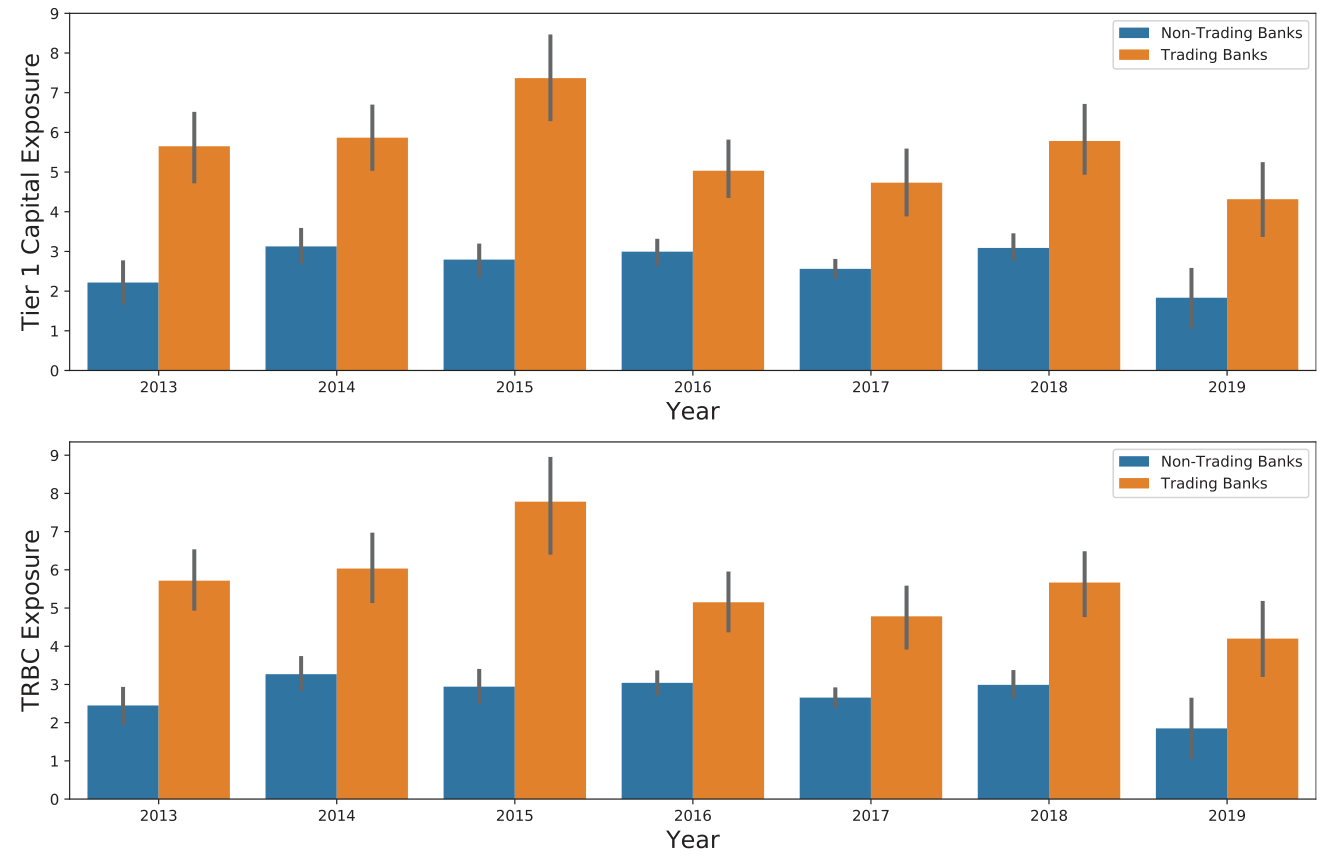
Figure 2 upper panels: grouped bars showing greater stress-test capital exposure among trading banks than nontrading banks
Figure 2 (upper panels) · Stress-test exposure: trading versus nontrading banks
Review of Finance · 2023

Bank Stress Testing: Public Interest or Regulatory Capture?

Evaluates whether stress-test outcomes reflect systemic risk or political and regulatory influence. Large trading banks face more stringent tests; political and regulatory ties do not predict quantitative outcomes, although regulatory connections may reduce qualitative scrutiny.

With Philip Strahan and Jun Yang